The Top Ten Weather and Climate Events of 2018

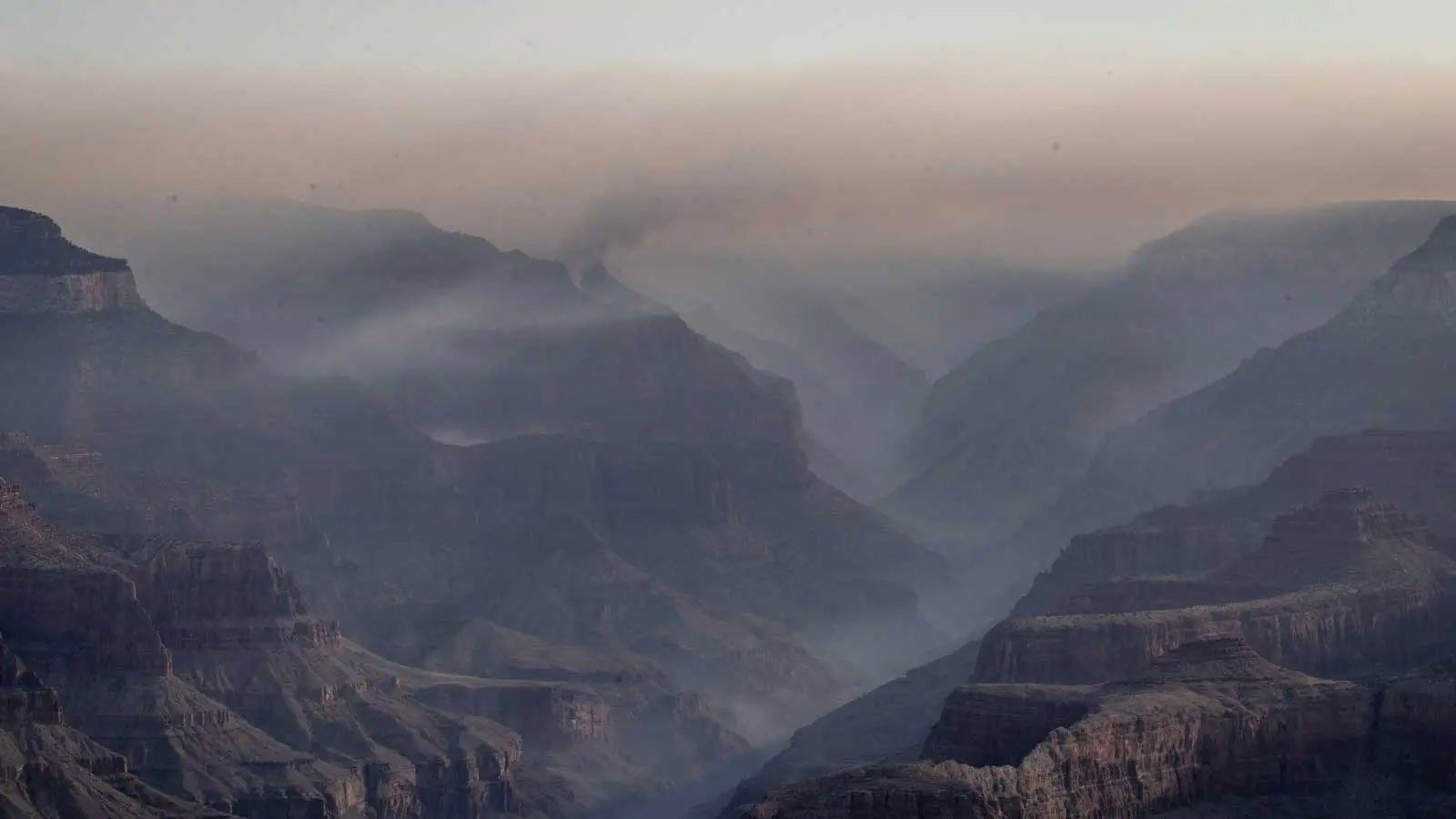
Above: California’s Camp Fire as seen by the Landsat-8 satellite on November 8, 2018. Image credit: U.S. Geological Survey, processed by Pierre Markuse.
Dangerous climate change is here now. That’s the take-home message from 2018’s extraordinary series of extreme weather events—including at least 37 billion-dollar weather disasters—which demonstrated that dangerous climate change is not a distant future threat, but today’s reality. This year’s preliminary tally of 37 billion-dollar weather disasters would be the third most on record, according to insurance broker Aon Benfield. The only years with more were 2010 and 2013, which both had 41.
The high number of disasters was due, in part, to an unusually persistent and extreme summertime jet stream pattern that brought extended periods of extreme weather to parts of the Northern Hemisphere. Research published in October blamed “stuck” jet stream patterns like this on human-caused climate change, and predicted that our future climate is likely to bring a significant increase in such destructive jet stream patterns.
Here, then, is our pick of the top ten weather and climate events of 2018:

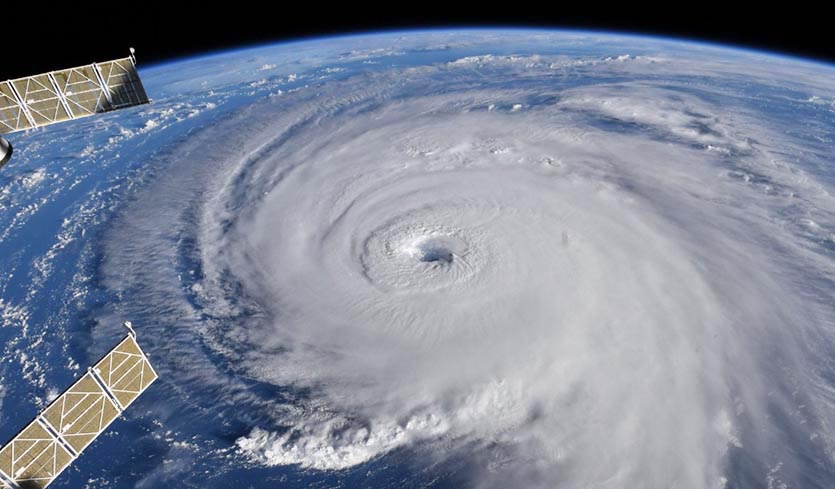
2. Hurricane Florence. For the second year in a row, a very slow-moving hurricane smashed all-time record rainfall records in the U.S., as Hurricane Florence’s rains broke the U.S. rainfall records for North Carolina and South Carolina. The three largest U.S. rainfall events, when measured by how much rain fell over an area of 14,000 - 20,000 square miles over a 4-day period, have all occurred in the past three years--Hurricane Florence in the Carolinas in 2018, Hurricane Harvey in Texas/Louisiana in 2017, and a March 2016 storm in Louisiana. This is the type of behavior one might expect to see with global warming putting more moisture into the atmosphere and increasing the frequency and intensity of heavy precipitation events. A "pre-attribution" study carried out prior to landfall estimated that, because of climate change, Florence’s most intense rains over North Carolina would be more than 50% heavier than they would have been otherwise. Above: ISS image of Hurricane Florence at 9 am EDT Wednesday, September 12, 2018. Image credit: Ricky Arnold.

3. Hurricane Michael. The most expensive weather-related disaster of 2018 was Hurricane Michael, which made landfall on October 10, 2018, near Mexico Beach, Florida, with top sustained winds of 155 mph and a central pressure of 919 mb. Hurricane Michael’s landfall pressure was the third lowest for a continental US hurricane landfall on record, and its landfalling winds were the fourth highest for a continental U.S. landfall on record. Catastrophic damage in excess of $15 billion resulted, along with at least 49 direct and indirect deaths. Above: Homes and businesses along U.S. 98 are left in devastation by Hurricane Michael on Friday, Oct. 12, 2018, in Mexico Beach, Fla. Image credit: Mark Wallheiser/Getty Images.

4. Year of the deadly mega-wildfire. Two of the top twelve deadliest wildfires in world history hit in 2018: the November 9 Camp Fire in and near Paradise, California which killed 86, and the July Attica wildfires in Greece which killed 126 (EM-DAT). Below is the top twelve list of deadliest wildfire events globally, according to EM-DAT and other official and unofficial data sources. It is sobering to note that we have seen a resurgence in very deadly fires in the 21st century, after seeing a notable absence in the middle and late 20th century. The recent resurgence is largely due to our increased vulnerability (more people living in the wildland/urban interface) plus more extreme fire weather (hotter, drier heat waves due to human-caused climate change), plus bad luck.
- 1200 - 2500 deaths, 1871 (Peshtigo Fire, Wisconsin)
- 1200 deaths, 1936 (Kursha-2 Fire, Soviet Union)
- 453 deaths, 1918 (Cloquet Fire, Minnesota)
- 418+ deaths, 1894 (Hinkley Fire, Minnesota)
- 282 deaths, 1882 (Thumb Fire, Michigan)
- 240 deaths, 1997 (Indonesia forest fires)
- 223 deaths, 1916 (Great Matheson Fire, Ontario, Canada)
- 191 deaths, 1987 (Black Dragon Fire, China and Soviet Union)
- 180 deaths, 2009 (Black Saturday bushfires, Australia)
- 160 deaths, 1825 (Miramichi Fire, New Brunswick, Canada)
- 126 deaths, 2018 (Attica, Greece)
- 86 deaths, 2018 (Camp Fire, California)
Also worth noting: An unprecedentedly powerful EF3 "fire tornado" struck near Redding, California as part of the Carr Fire. That fire killed 8, cost over $1 billion, and was the seventh largest fire in California history. California also suffered its largest fire on record in 2018—the 459,000-acre Mendocino Complex Fire of July through August—and the Camp Fire was the state's most destructive on record, with more than 18,800 structures lost. Above: Firefighters try to extinguish flames during a wildfire at the village of Kineta, near Athens, Greece, on July 24, 2018. Image credit: Valerie Gache/AFP.


9. Seven billion-dollar droughts. Seven billion-dollar droughts hit Earth in 2018: Northern and Central Europe ($7.5 billion), Argentina/Uruguay ($3.9 billion), China ($3.5 billion), U.S. ($2 billion), South Africa ($1.2 billion), Australia ($1.2 billion), and India ($1.1 billion). The northern European drought was made at least 2 – 5 times more likely at some locations by climate change, according to a preliminary analysis by the World Weather Attribution network.The drought in South Africa was so severe that the city of Cape Town came within a few weeks of running out of water. Fortunately, waters in the city’s reservoirs have rebounded in recent months, thanks to draconian conservation measures and timely rains. Above: Sad, dried sunflowers in a field near Magdeburg, eastern Germany on July 26, 2018. Image credit: Tobias Schwarz/AFP/Getty Images.

10 (Tie). Japan flood. Historic rainfall from June 29 to July 8 led to catastrophic flash flooding and mudslides across Japan, leaving at least 230 people dead—their deadliest flood event since 1982. More than 40” (1,015 millimeters) of rain fell across parts of Kochi, Gifu, and Nagano prefectures and Tokushima. The rains, which were heaviest from July 4 to 7, were spawned by the presence of a stationary seasonal frontal boundary enhanced by remnant moisture from Typhoon Prapiroon. Floodwaters of up to 5.0 meters (16.4 feet) in height led to catastrophic inundation in some areas, with nearly 50,000 homes and other structures damaged or destroyed. Total damage was estimated at $7 billion. According to a preliminary analysis released by the World Weather Attribution network, the disaster was made more likely by climate change, but the data was too noisy to compute by how much. Above: An emergency crew works at the site after a train derailed due to landslides caused by heavy rain in Karatsu city, Saga prefecture on July 7, 2018. Image credit: STR/AFP/Getty Images.

For more details on the top climate-related stories of 2018, check out Bob Henson's roundup at weather.com.
Bob Henson contributed to this post.
The Weather Company’s primary journalistic mission is to report on breaking weather news, the environment and the importance of science to our lives. This story does not necessarily represent the position of our parent company, IBM.