Snow, Stars, and Stress: Science at Concordia Station

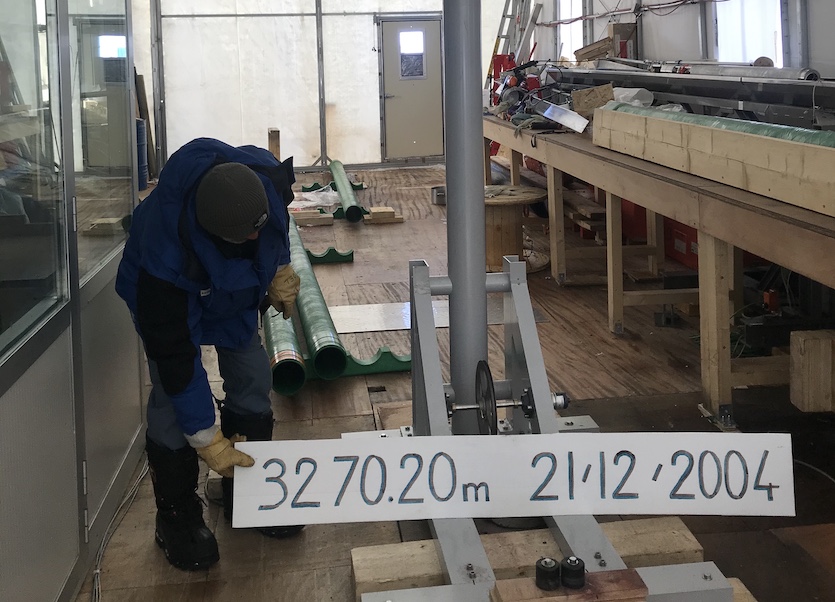
Above: A glaciologist examines ice cores drilled at Concordia Station. The cores are held locally in deep cold storage awaiting analysis by visiting researchers. (Photo by Stijn Thoolen, ESA. All other photos by Pete Akers unless otherwise noted).
Editor's note: Paleoclimate researcher Pete Akers (Institut des Géosciences de l’Environnement or IGE in Grenoble, France) is a participant in the 2019-20 East Antarctic International Ice Sheet Traverse (Project EAIIST). Pete is writing about the project in a special series for Category 6. See his Cat 6 contributor’s page for links to previous entries.
Concordia Station, located high on the Antarctic Plateau over 600 miles (1100 kilometers) from the coast, is a hub for European polar science. Due to the extreme environment and year-round staffing, several of its research projects simply cannot be performed anywhere else on Earth (with the lone possible exceptions of the fellow permanent Antarctic Plateau stations of Vostok and Amundsen-Scott). The work being done at Concordia is giving us critical knowledge about our Earth’s climate and other physical system, and I’ll highlight some of this work from the past and present here.
The EPICA Dome C drilling project
No discussion of Concordia is complete without the topic of ice cores. The permanent buildings and infrastructure on Dome C that we know as Concordia Station was finished for the first winter-over in 2005. However, travel and research at Dome C date back to the 1970s and 1980s, and major scientific presence began in the late 1990s with the European Project for Ice Coring in Antarctica (EPICA). The EPICA working group, drawing scientific expertise and talent from across Europe, chose Dome C as a site for a deep ice core that would hopefully extend back farther in time than any previous ice core. Drilling of the ice began in 1996 until the drill became stuck at 2585 ft (788 m) in 1999. A second core was started in 1999 and produced the continuous Dome C ice core most often cited today. Drilling could only occur during summer, as there was not yet a permanent station that would allow work during the colder seasons.
Much of the technology and designs for coring ice have been specially adapted from rock and oil drilling equipment, with Norwegian experts particularly advanced in this field. Ice cores are challenging to take in part because the consistency and structure of an ice sheet changes dramatically over the first 700-1000 ft (200-300 m), transitioning from snow to a porous intermediate snow-ice state called firn to finally ice that is increasingly dense and brittle with depth. Deep within the ice sheet, intense pressure pushes in on any borehole, and this requires a liquid (such as kerosene) to keep the borehole from collapsing on itself. As you might imagine, it has taken a lot of trial and error and ingenuity to develop drilling designs that can successfully recover miles-long ice cores without contamination or the drill getting stuck.
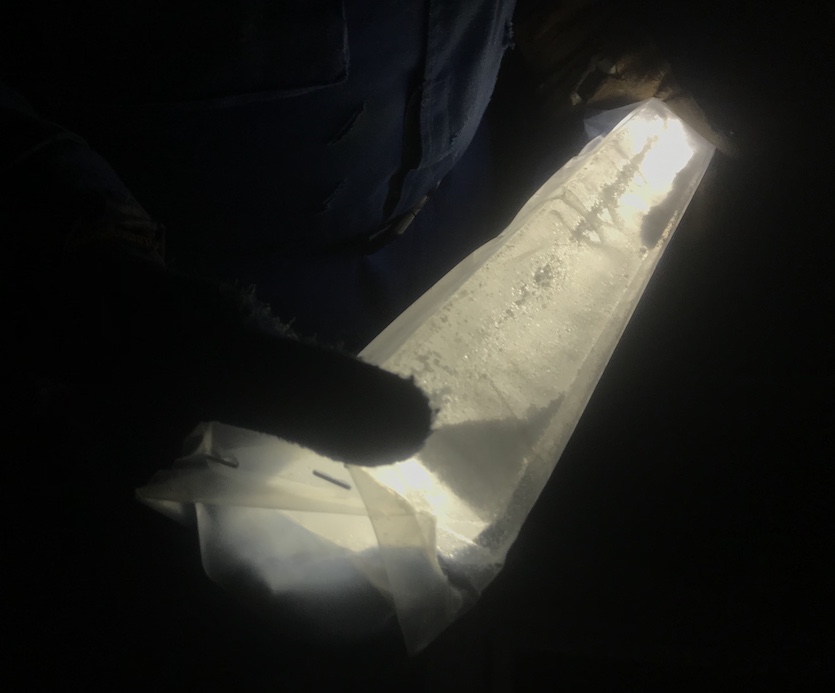
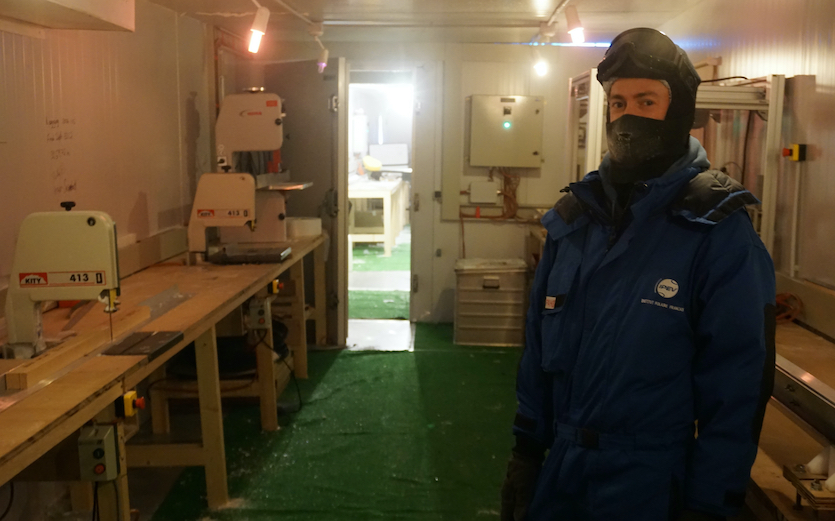
Coring an ice sheet is a long process, with sections of core coming out of the borehole 3 ft (1 m) at a time. While some workers continuously drilled the core at Dome C, other researchers took extracted pieces to a nearby ice processing lab where they cut each core section lengthwise into halves, quarters, and even smaller subdivisions. These subdivisions were then shipped to different labs across Europe to analyze the ice for many things, including water isotopes, trapped atmospheric gases, dust content, and other geochemistry.
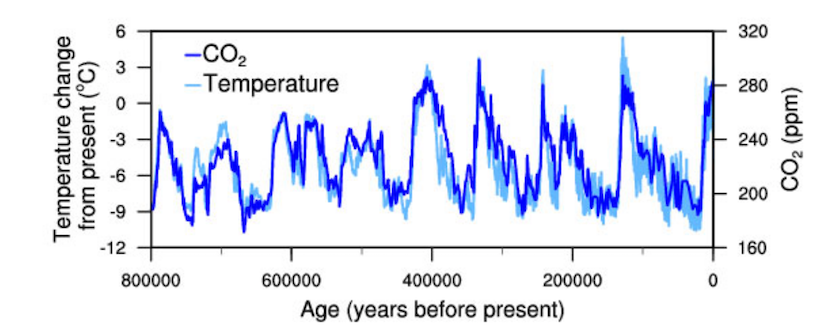
The EPICA Dome C drilling project can only be described as a massive success. In December 2004, coring was stopped 16 ft (5 m) above the bedrock that sits more than two miles beneath Concordia. In total, the drillers had obtained a 10,729-foot (3270.2-meter) long ice core that represented over 800,000 years of accumulating snow. The resulting record of climate history after years of analysis of the core has dramatically changed our understanding of Earth’s environmental changes. Perhaps most important has been the reconstruction of fluctuating concentrations of greenhouse gases, such as carbon dioxide and methane, taken from air bubbles trapped and preserved in the ice. These air bubbles give us direct observations of just how anomalously high and rapidly rising our current greenhouse gas concentrations are relative to the natural cycle for the Earth.
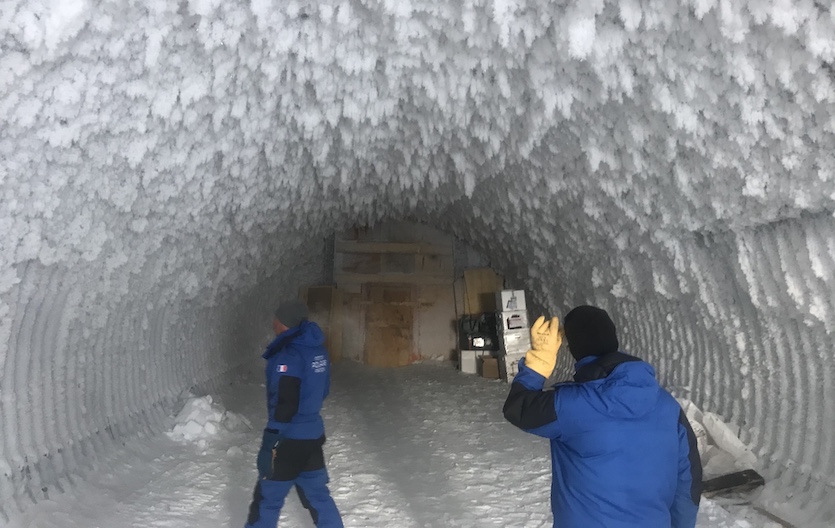
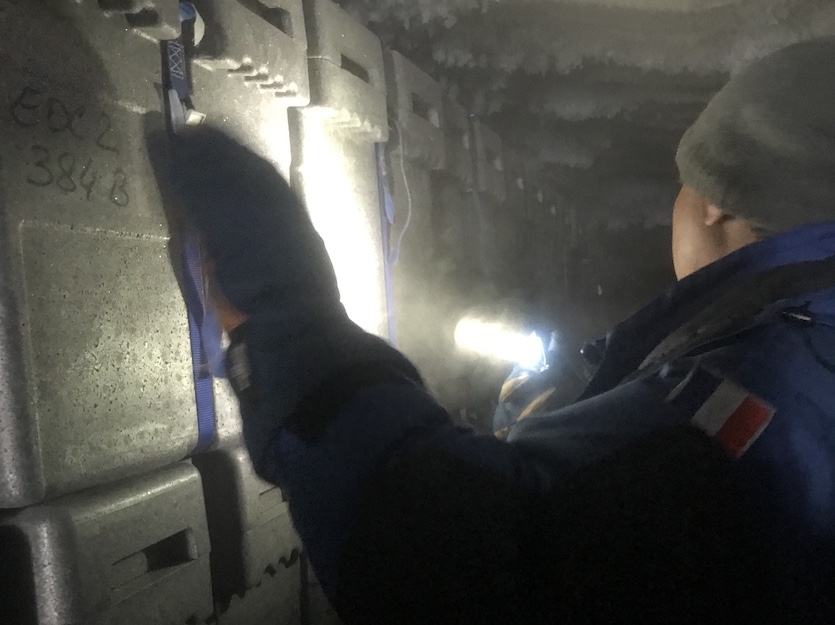
While some of the EPICA Dome C core was shipped to Europe for analysis, part of each core was saved and archived at Concordia Station. Here, in a chamber built under the snow surface, the ice core will stay safe and frozen year round at –67°F (–55°C). Future researchers can request access to this archived core to make new discoveries as technologies advance, and the EPICA group must balance the reward of new science with the consumption of the limited ice.
Other ice coring projects at Concordia
The natural freezer characteristics of Concordia have made it the destination for hundreds of non-Antarctic ice cores through the Ice Memory project. This project has brought together researchers from countries around the world to identify glaciers threatened by climate change and take ice cores before the glaciers disappear. These ice cores will be transported to Concordia and stored so that future generations and technology may be able to discover important climate and environmental histories after the parent glacier is gone. Some of the first cores have already been taken from Mont Blanc in the French Alps and the Illimani glacier in Bolivia, with several other sites such as Kilimanjaro in progress or planned.
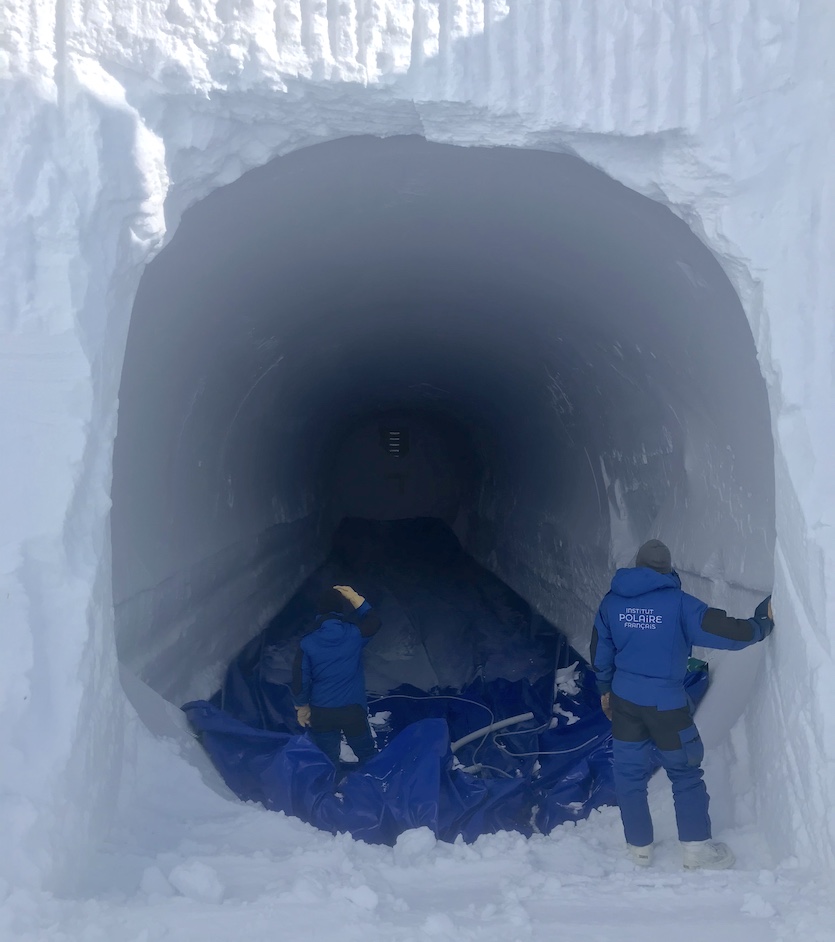
Even as scientific work continues on archived sections of the original Dome C core, Concordia Station is serving as a base of operations for a new project: Beyond EPICA—Oldest Ice. Advances in technology, such as ice penetrating radar and glacial flow modeling, have allowed scientists to better predict where ice may exist that is even older than that of the EPICA Dome C core. One such location, 18 mi (30 km) away from Concordia, is known as Little Dome C. Here, the beginnings of an ice drilling camp has been constructed with official drilling to begin in the summer of 2020-2021.
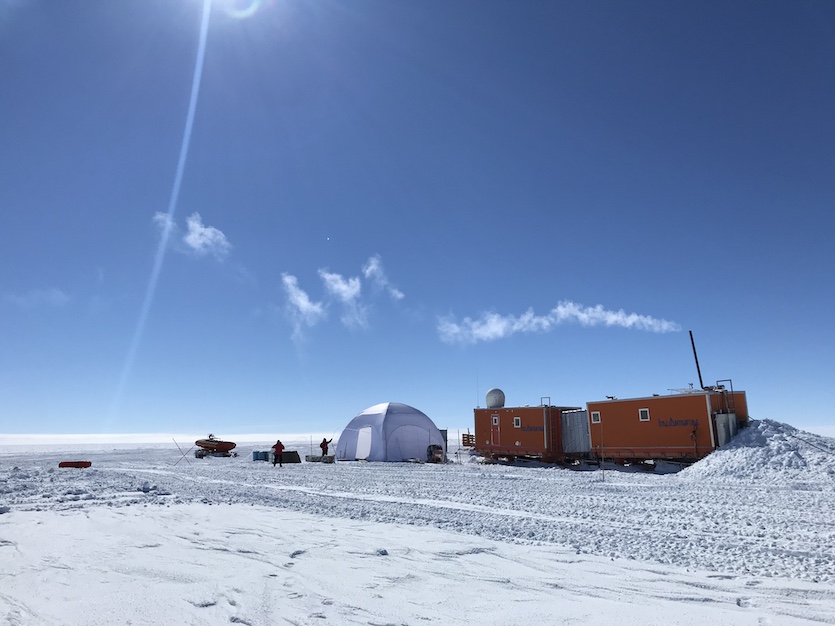
Over the next several years, a new core over 9800 ft (3000 m) long will be drilled, perhaps reaching back over 1.5 million years in age. Although the ice sheet is similar in thickness at Little Dome C and Dome C, researchers expect the older ice to exist here, due to a combination of a lower snow accumulation rate and a bedrock topography that reduces basal ice flow and melting.
This extension of our climate record beyond 800,000 years is important because it covers an important shift in Earth’s climate system called the Mid-Pleistocene Transition. At this time, the global climate changed from having relatively minor warmer-colder oscillations every 40,000 years to the extreme interglacial-glacial oscillations associated with ice ages happening every 100,000 years since then up through the present day. The reason for this change is not currently known, and it is hoped that the bounty of climate data held in ice cores can help solve this mystery.
While active ice coring no longer occurs at Concordia Station itself, plenty of other research has taken its place. Scientists from across Europe can propose research projects to the Concordia research committee, and approved projects can run for many years.
Atmospheric and snow chemistry
For the past several years, samples of snow and atmospheric gases and aerosols have been taken year-round near Concordia Station to better understand seasonal cycles and interannual variability in both local and global climate. Concordia is a prime site for these studies because its tremendous distance from major human activities and cities means that any observed variations can be trusted to reflect true regional and global changes. Some of these samples are taken manually; for example, one of the winter-over members digs a shallow, 3-foot (1-meter) deep snow pit every few days and takes surface and subsurface snow samples throughout the year.
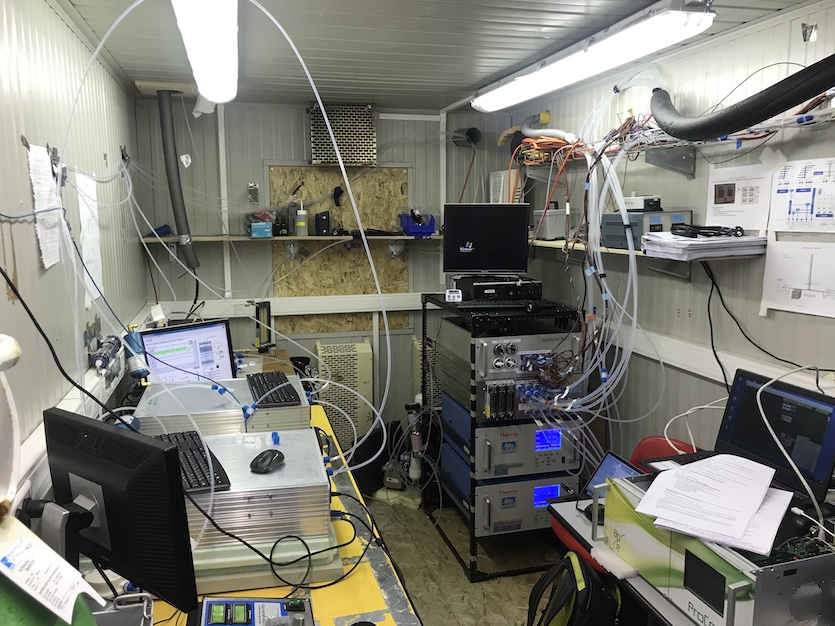
Other observations are continuous and automated, only needing a worker to maintain the equipment and download data. From a shelter buried in the snow about 500 yards (meters) from the main station, several tubes snake out across the terrain to towers where they suck in air samples at different heights above the surface. These samples are analyzed for a wide variety of chemistry, including water vapor isotopes and concentrations of trace gases such as ozone. Scientists can then track how these various atmospheric properties change over the course of a year and how they interact with changes in local weather and air masses.
Seismology and astronomy
A specially constructed snow cavern hosts seismic stations that capture even the smallest Antarctic earthquakes. These readings are helping researchers to better understand the geology underlaying the Antarctic ice sheet as well as the ice sheet itself. There are several seismic stations installed as part of the EAIIST traverse at sites along our route, and these will work in concert with the data from the seismic stations already present at Concordia.
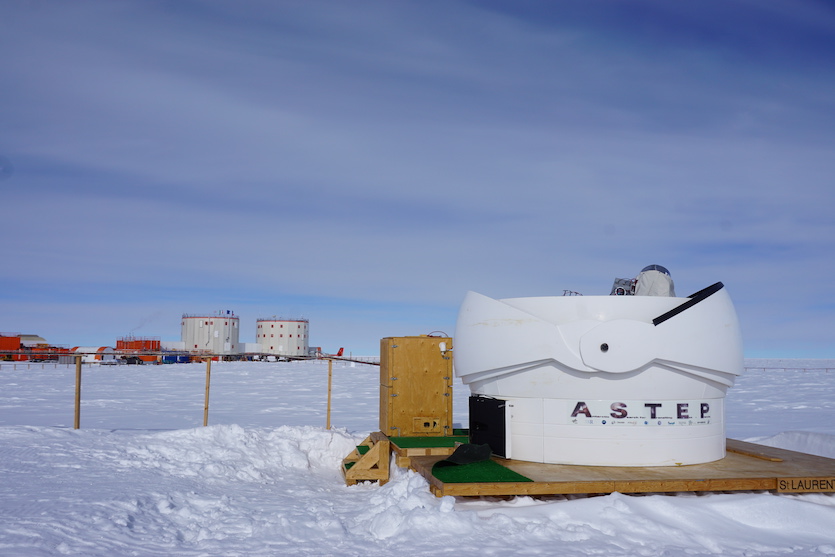
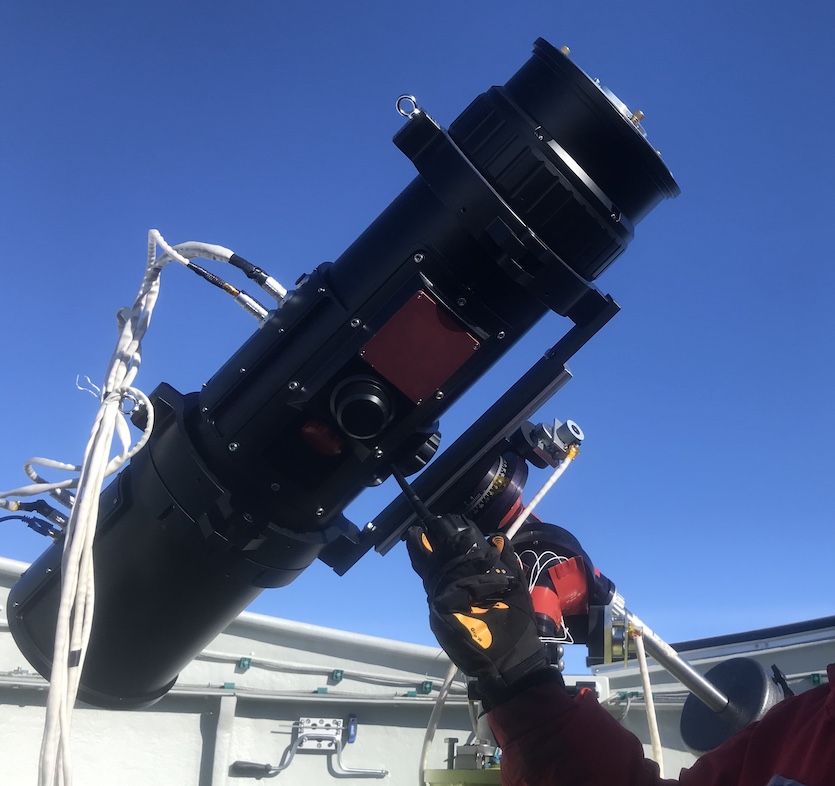
Several telescopes operated by the European Space Agency (ESA) take advantage of Concordia’s clear skies, low pollution, and long winter darkness for astronomical observations. For example, one project running at Concordia is ASTEP, which has a largely autonomous telescope that looks for dips and changes in starlight that indicates that an orbiting exoplanet is present. Another project is taking advantage of Concordia’s thin air two miles (3 km) above sea level to study the outer atmosphere of the sun. Using one of the few Earth-based coronagraphs, the scientists are to image the corona in a manner like a total eclipse by blocking out the light from the sun’s disk. With thinner air, the brightness of the sky is low enough that study of the faint corona is possible.
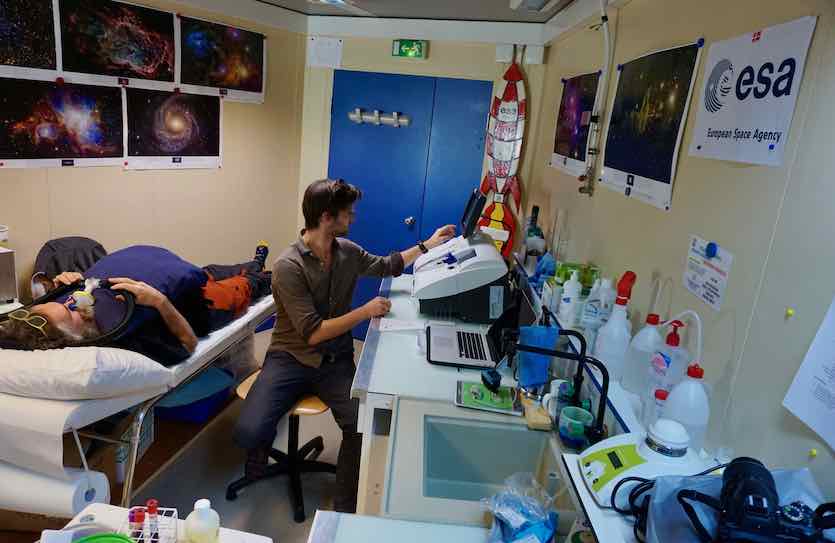
But it isn’t just stars that the ESA is interested in. One of the winter over members is an ESA medical researcher who studies the other winter-over residents, because the isolation, darkness, and stresses of the winter-over are similar to what would be expected on long-duration space missions. Regular blood samples, sleep pattern detection, and probiotic ingestion are all part of the life of a permanent Concordia resident.
The diverse set of researchers present during the summer at Concordia creates a fertile ground for new ideas and future project development. Studies that cut across scientific disciplines and bring together people from different countries and backgrounds are a natural product of running a place like Concordia Station. The EAIIST mission is one product of this collaboration, and projects such as Ice Memory and Beyond EPICA will continue this spirit of international cooperation well into the future.
The views of the author are his/her own and do not necessarily represent the position of The Weather Company or its parent, IBM.