America’s Deadliest Wildfire in 100 Years: 56 Dead in Paradise, California

Above: A fallen power line is seen on top of burnt out vehicles on the side of the road in Paradise, California after the Camp fire tore through the area on November 10, 2018. Note the melted metal from the cars puddled on the road. Image credit: JOSH EDELSON/AFP/Getty Images.
The death toll from the California’s Camp Fire, which devastated the northern California town of Paradise last Thursday, had grown to 88 by December, making it America’s deadliest wildfire in 100 years. The last time the U.S. had a deadlier fire was in 1918, when the Cloquet Fire swept through Minnesota, killing an estimated 453 people.
No U.S. agency keeps official tallies of the nation’s wildfire deaths, but EM-DAT, the international disaster database, has global wildfire statistics going back to 1911. Using their data, plus additional information from other official and unofficial sources, here is a list of all U.S. wildfires on record that have killed at least thirteen people:
- 1200-2500 deaths, 1871 (Peshtigo Fire, Wisconsin)
- 453 deaths, 1918 (Cloquet Fire, Minnesota)...Sometimes erroneously stated as 1000 deaths
- 418+ deaths, 1894 (Hinkley Fire, Minnesota)
- 282 deaths, 1882 (Thumb Fire, Michigan)
- 88 deaths, 2018 (Camp Fire, Paradise, California)
- 87 deaths, 1910 (Great Fire of 1910, Idaho and Montana)
- 65 deaths, 1902 (Yacolt Burn, Oregon and Washington)
- 29 deaths, 1933 (Griffith Park Fire, Los Angeles, California)
- 25 deaths, 1991 (Tunnel Fire, Oakland Hills, California)
- 22 deaths, 2017 (Tubbs Fire, California)
- 19 deaths, 2013 (Yarnell Fire, Arizona)
- 16 deaths, 1947 (The Great Fires of 1947, Maine)
- 15 deaths, 2003 (Cedar Fire, Sand Diego County, California)
- 15 deaths, 1953 (Rattlesnake Fire, California)
- 15 deaths, 1937 (Blackwater Creek Fire, Wyoming)
- 14 deaths, 2017 (Gatlinburg, Tennessee)
- 13 deaths, 1994 (South Canyon Fire, Colorado)
Below is the top twenty-five list of deadliest wildfire events globally. It is sobering to note that we have seen a resurgence in very deadly fires in the 21st century, after seeing a notable absence in the middle and late 20th century. The recent resurgence is largely due to our increased vulnerability (more people living in the wildland/urban interface) plus more extreme fire weather (hotter, drier heat waves due to human-caused climate change), plus bad luck.
- 1200-2500 deaths, 1871 (Peshtigo Fire, Wisconsin)
- 1200 deaths, 1936 (Kursha-2 Fire, Soveiet Union)
- 453 deaths, 1918 (Cloquet Fire, Minnesota)
- 418+ deaths, 1894 (Hinkley Fire, Minnesota)
- 282 deaths, 1882 (Thumb Fire, Michigan)
- 240 deaths, 1997 (Indonesia forest fires)
- 223 deaths, 1916 (Great Matheson Fire, Ontario, Canada)
- 191 deaths, 1987 (Black Dragon Fire, China and Soviet Union)
- 180 deaths, 2009 (Black Saturday bushfires, Australia)
- 160 deaths, 1825 (Miramichi Fire, New Brunswick, Canada)
- 126 deaths, 2018 (Attica, Greece)
- 88 deaths, 2018 (Camp Fire, California)
- 87 deaths, 1910 (Great Fire of 1910, Idaho and Montana)
- 82 deaths, 1949 (Landes Fire, France)
- 75 deaths, 1983 (Ash Wednesday bushfires, Australia)
- 73 deaths, 1911 (Great Porcupine Fire, Ontario, Canada)
- 71 deaths, 1939 (Black Friday bushfires, Australia)
- 65 deaths, 2007 (Greece)
- 65 deaths, 1902 (Yacolt Burn, Oregon and Washington)
- 64 deaths, 2017 (Portugal)
- 62 deaths, 1967 (Tasmania, Australia)
- 60 deaths, 1929 (Mexico)
- 57 deaths, 1991 (Indonesia)
- 56 deaths, 1992 (Nepal)
- 53 deaths, 2010 (Russia)
- 50 deaths, 1998 (Mexico)

Firefighters making progress
Firefighters have made considerable progress fighting California’s fires, though they have one more day of severe fire conditions. At 10 pm EST Wednesday, Cal Fire reported that the Camp Fire near the town of Paradise in Northern California was 35% contained and had burned 138,000 acres, making it the 20th largest fire in California history. More than 10,000 structures were destroyed by the fire, mostly in Paradise (population 27,000). This makes it the most destructive fire in California history, in addition to being the deadliest.
The Woolsey Fire, which has been rampaging across the Malibu area and other parts of Ventura and Los Angeles counties, has destroyed at least 483 structures, according to a Cal Fire update at 11:04 am EST Wednesday. The fire has consumed 98,000 acres and was 47% contained. Two deaths and three firefighter injuries have been attributed to the fire.
A few miles to the west, the Hill Fire was 94% contained after torching more than 4500 acres and two structures, Cal Fire reported at 11:22 am EST Wednesday.

A final day of very dangerous Santa Ana winds
Very dangerous fire conditions will continue across Southern California on Wednesday, thanks to gusty Santa Ana winds combined with exceptionally dry conditions. For the first time this week, NOAA’s Storm Prediction Center (SPC) has not outlined any “Extremely Critical” fire weather areas--the highest level of danger. However, portions of Southern California near Los Angeles and San Diego were still in the very dangerous “Critical” fire weather area for Wednesday. Sustained offshore winds of 20 - 30 mph combined with exceptionally low humidity and very dry fuels with pose a severe threat. By Thursday, the winds will decrease to about 15 – 20 mph, as this severe and long-lived Santa Ana wind event finally begins to ease.
There is hope on the horizon for rain: long-range runs of the GFS and European models are now predicting that California’s first major storm system of the season will affect central and northern portions of the state next week on Tuesday or Wednesday, bringing welcome rains and cooler temperatures.

Dangerous air quality in California
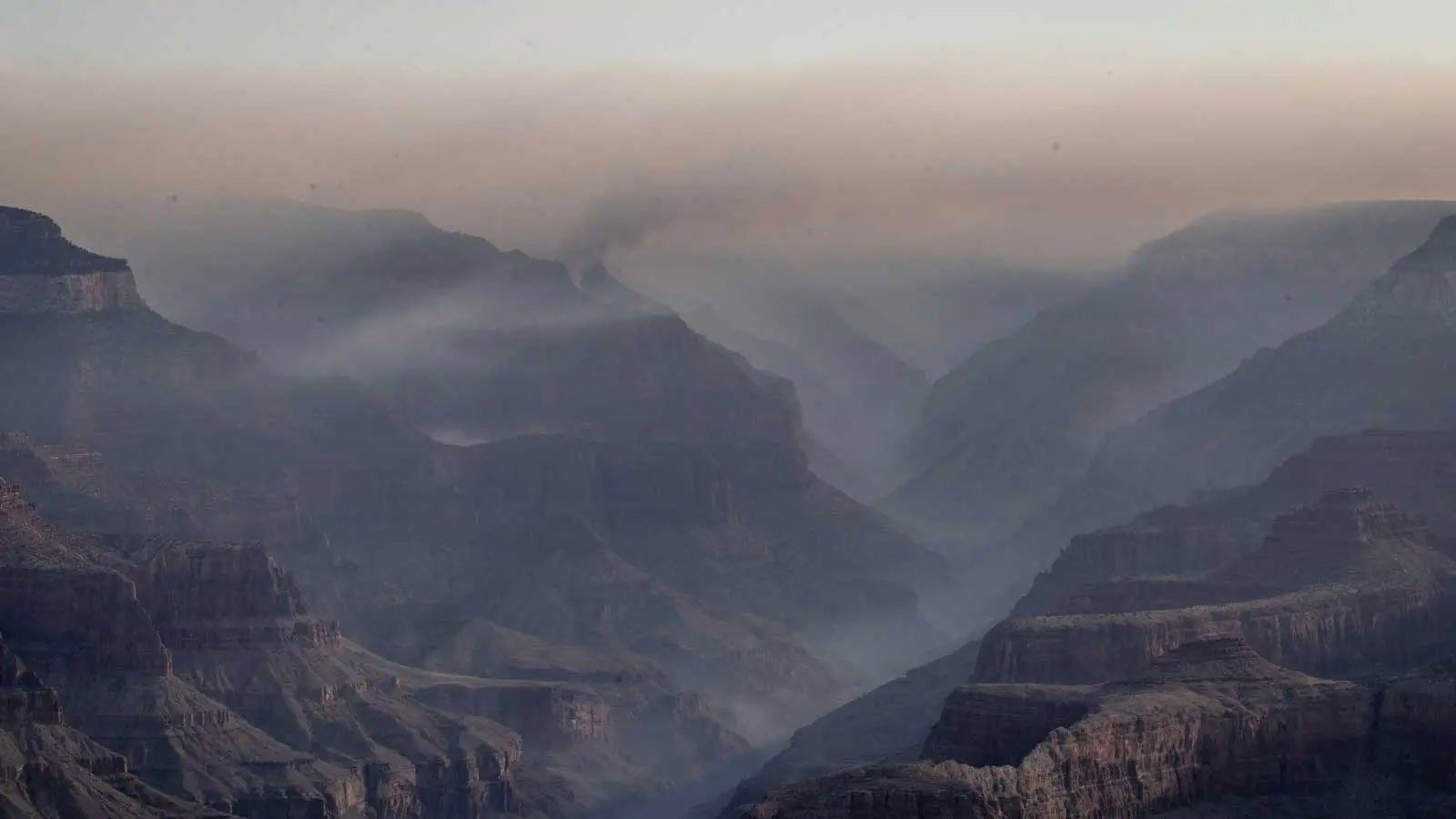
Smoke from the Camp Fire continues to plague much of central and northern California, bringing dangerously high levels of fine particulate pollution (PM2.5, particles less than 2.5 microns or 0.0001 inch in diameter). Hourly levels of PM2.5 were in the red “Unhealthy” range at sixteen official EPA monitors across the region Wednesday morning, with four stations reporting purple “Very Unhealthy” conditions. Smoke from the Camp Fire is predicted to move northwards over western Oregon and Washington on Wednesday afternoon, bringing some areas of orange “Unhealthy for Sensitive Groups” conditions. Smoke from the Woolsey fire near Los Angeles was mostly blowing out to sea, and thus air quality in Southern California was generally acceptable.
Most Air Quality monitors in Wrn WA have reached moderate category. A couple locations are at unhealthy levels for sensitive groups. The #smoke model shows near-surface smoke lifting north into WA/Oregon from CA. A front should improve AQ by evening. Visit https://t.co/dzuO3BsIQ7 pic.twitter.com/4SKvol93hg
The tragic burning and asphyxiation deaths of at least 50 people in the latest California wildfires are just a small fraction of the deaths these fires are likely to bring, unfortunately. Air pollution from the fires are bound to cause hundreds more premature deaths, given the large population that is being exposed to dangerous levels of choking smoke. A July 2018 paper by Colorado State University's Bonne Ford and co-authors estimated that wildfire smoke contributed to 17,000 premature air pollution deaths per year, on average, in the U.S. in the year 2000. This number was projected to rise to 44,000 deaths per year by the year 2100, if we follow a “business-as-usual” approach to climate change (RCP8.5 scenario), which would lead to a steady increase in U.S. wildfires. A premature air pollution-related death typically occurs about twelve years earlier than it otherwise might have.

Figure 4. A home burns as the Camp Fire tears through Paradise, California on November 8, 2018. Image credit: Josh Edelson/AFP/Getty Images.
Climate change and California’s November fires
Dana Nuccitelli has an excellent post called, “The many ways climate change worsens California wildfires” at Yale Climate Connections. Daniel Swain, author of the California Weather Blog, fired off a superb tweetstorm on Saturday drawing the links between our evolving climate and California’s fire threat. One of the key elements in the multiple massive autumn fires of 2017 and 2018 has been extreme levels of drying summer heat followed by a delayed start to the winter wet season. Climate Signals has an excellent roundup on wildfire risk: http://www.climatesignals.org/climate-signals/wildfire-risk-increase.
Bob Henson contributed to this post.
The Weather Company’s primary journalistic mission is to report on breaking weather news, the environment and the importance of science to our lives. This story does not necessarily represent the position of our parent company, IBM.